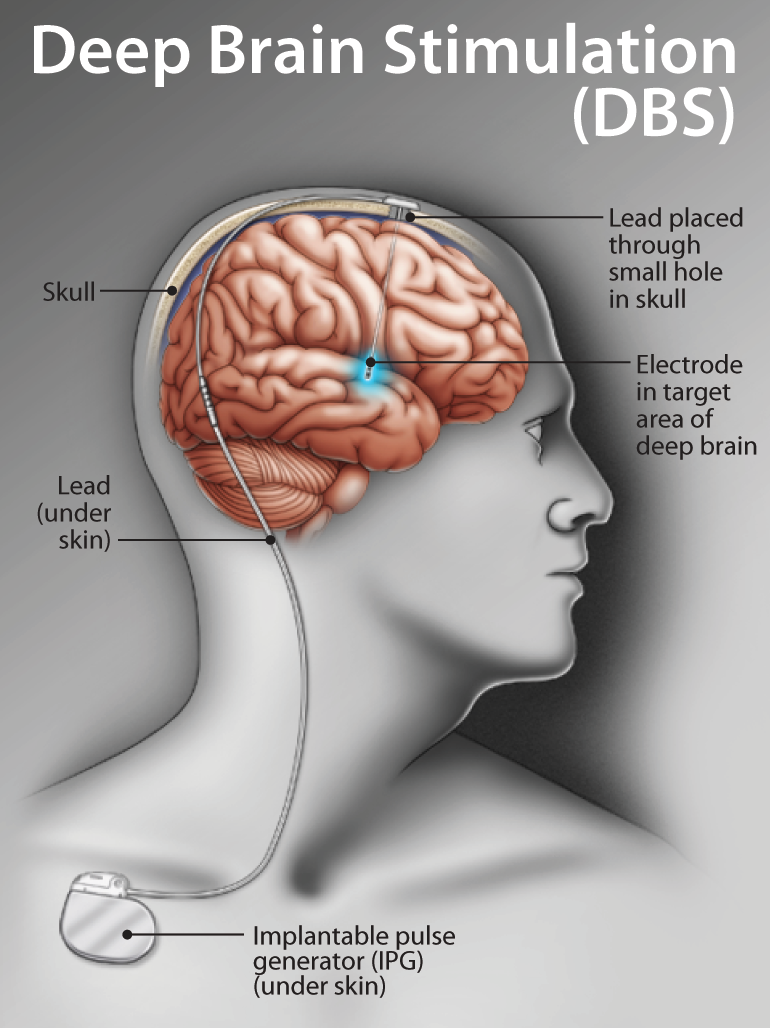
Deep Brain Stimulation (DBS) Therapy is a neurosurgical procedure in which a device, often referred to as a “brain pacemaker,” delivers electrical impulses to specific brain regions. This therapy modulates abnormal neuronal activity to restore a more normal functioning pattern. It does not “cure” diseases but helps manage symptoms, particularly for conditions that are resistant to medication. Here’s an overview:
How DBS Works
1. Electrode Placement: Electrodes are surgically implanted in precise brain regions, such as the thalamus, subthalamic nucleus, or globus pallidus, depending on the condition.
2. Pulse Generator: A small device implanted in the chest or abdomen sends controlled electrical impulses to the electrodes.
3. Stimulation: These impulses interfere with abnormal brain signals, alleviating symptoms or restoring function.
4. Customization: The frequency, intensity, and pattern of stimulation can be adjusted based on the patient’s response.
Diseases Treated with DBS
DBS is approved and widely used for the following conditions:
1. Neurological Disorders
Parkinson’s Disease: Effective for motor symptoms like tremors, rigidity, and dyskinesia.
Essential Tremor: Reduces severe, medication-resistant tremors.
Dystonia: Relieves involuntary muscle contractions.
Epilepsy: Reduces the frequency and severity of seizures in refractory cases.
2. Psychiatric Disorders
Obsessive-Compulsive Disorder (OCD): Approved for severe cases unresponsive to therapy and medication.
Depression: Investigational but has shown promise for treatment-resistant depression.
Tourette Syndrome: Helps control tics when other treatments fail.
3. Chronic Pain
Certain cases of chronic, neuropathic pain.
4. Other Experimental Uses
Alzheimer’s disease: Investigational for cognitive improvements.
Addiction: Being studied for severe substance abuse cases.
Anorexia nervosa: Under trial for severe and chronic forms.
Mechanism of Action
The exact mechanism isn’t fully understood, but DBS is thought to:
Modulate abnormal electrical activity in targeted brain circuits.
Restore balance in excitatory and inhibitory signals.
Facilitate neuroplasticity, helping the brain reorganize and adapt.
Benefits
Reduces reliance on medication and its side effects.
Improves quality of life by alleviating debilitating symptoms.
Limitations and Risks
Requires invasive surgery.
Risks include infection, bleeding, hardware malfunctions, and stimulation-related side effects (e.g., mood changes or speech difficulties).
It is not effective for all patients or conditions.